Water does the work: understanding pressure and flow rate
How many bar does the machine deliver? This is often the first question when choosing a pressure washer. But pressure alone does not tell you enough about the cleaning result. Ultimately, the water does the work: it transfers energy to the surface, loosens contamination and carries away the released residues.
How effectively it does this depends on the combination of pressure, flow rate, nozzle and application. Comparing only the highest pressure rating overlooks an essential part of cleaning performance.
How pressure contributes to the cleaning result
Working pressure is expressed in bar. Together with a suitable nozzle, it produces a water jet whose effect needs to match the cleaning task. Stubborn deposits or firmly bonded layers may require a different configuration from loose contamination on a surface.
The required pressure also depends on the substrate. A surface that needs to be preserved requires a different approach from material that is deliberately being removed. Higher pressure is therefore only useful when it suits the task. Spray pattern, working distance and travel speed also influence the actual effect on the surface.
Why flow rate is just as important
Flow rate indicates how much water the machine delivers per minute. It is commonly expressed in litres per minute or litres per hour. This volume of water plays an important role in rinsing and carrying away loosened contamination. Particularly when cleaning larger areas, a suitable flow rate can make a substantial contribution to work progress.
A machine operating at 15 l/min delivers 15 litres of water in one minute. At 30 l/min, it delivers 30 litres over the same period. The second configuration therefore supplies twice the volume of water. However, this does not automatically mean twice the area can be cleaned in the same time. Pressure, tools, contamination and working technique also need to be considered.
The right question is therefore: how much pressure and water does my application need?
The nozzle connects the machine to the surface
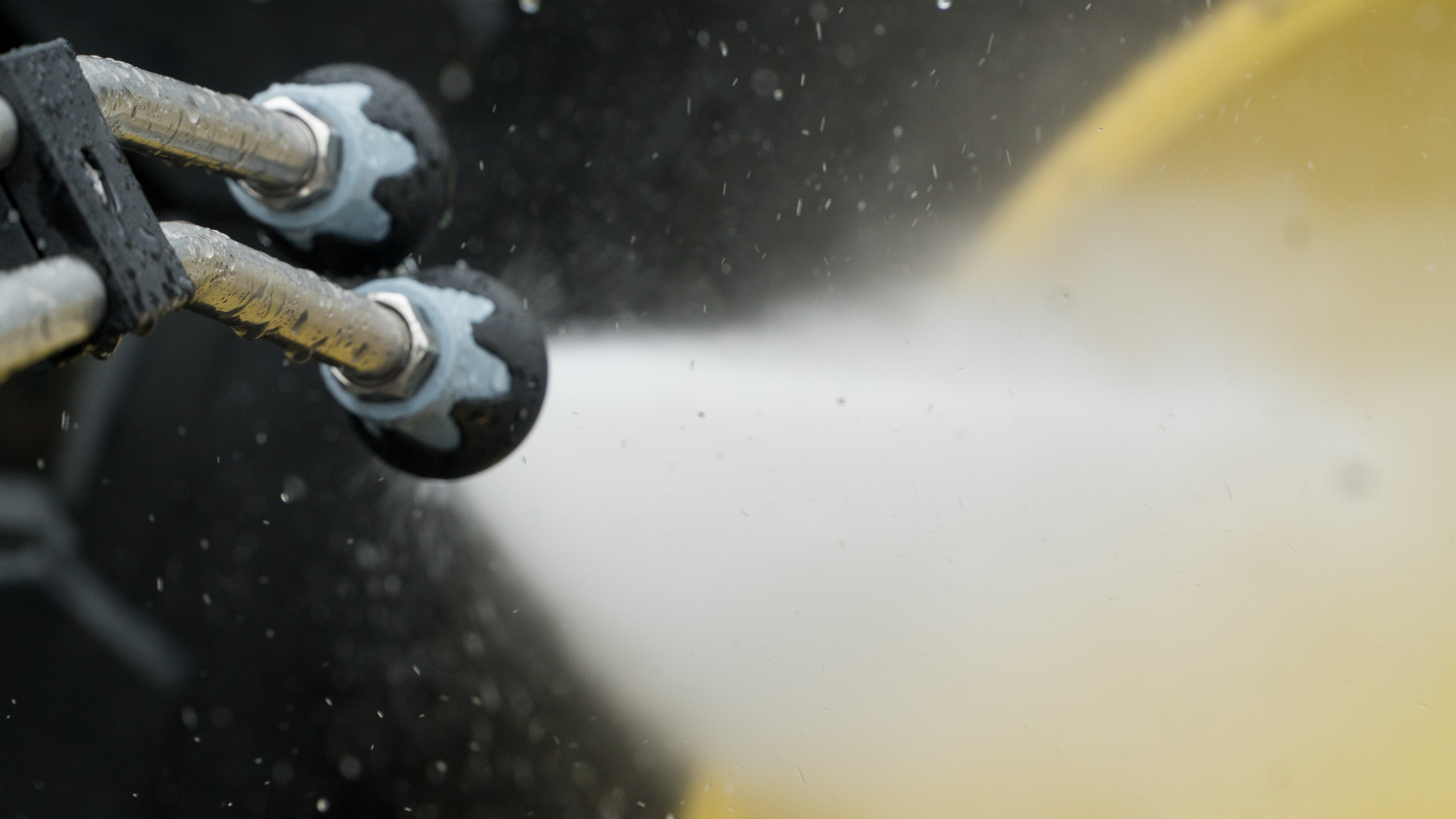
The pump supplies the water; the nozzle shapes it into a jet. The nozzle opening and spray pattern must suit the intended combination of pressure and flow rate. A surface cleaner or another cleaning tool also needs a water supply that matches its requirements.
An unsuitable nozzle can prevent the system from operating as intended. When several nozzles are used, the distribution of water across the tool also matters. The performance stated on the rating plate can therefore only be put to effective use with properly matched equipment.
Include the water supply and hoses in your planning
A high flow rate is only useful if the inlet supply can provide the required volume of water. The water supply at the work site should therefore be checked when selecting the equipment. This is particularly important when several devices share one connection or an existing supply system is to remain in use.
Hose length, hose diameter and fittings also influence the system configuration. Pressure losses occur along the water path and vary depending on the setup. Planning therefore needs to cover the entire route from the water connection to the tool.
What role does temperature play?
Heat can support the removal of certain types of contamination. This is an important consideration for oily or greasy residues, for example. Whether cold or hot water is appropriate depends on the contamination, surface and process. Temperature, pressure and flow rate are therefore considered together.
Here, too, the highest figure is not a selection goal in itself. The aim is to find a combination that achieves the required result with an appropriate level of effort and resources.
How to select the right performance specifications
- Describe the task: do you need to remove dirt, strip a layer or prepare a surface?
- Assess the substrate: which properties and sensitivities need to be taken into account?
- Select the tool: which nozzle, lance or surface cleaning tool suits the task?
- Check the supply: what water supply and power capacity are available at the work site?
- Match the configuration: consider pressure, flow rate and, where relevant, temperature as a complete system.
Specify high-pressure equipment to suit your application
At CLENA, we consider your application and the conditions on site. This helps establish the required performance specifications and the equipment that matches them. Our guide to choosing the right pressure washer (in German) also provides an initial overview.
Discuss the right pressure and flow rate for your application
Get in Touch Now
Are you looking for a durable and powerful cleaning solution? Then CLENA Solutions GmbH is the right choice for you. Contact us for a personalized consultation – together, we’ll find the optimal solution for your cleaning requirements.