WHICH PRESSURE WASHER IS BEST FOR PAVING STONES? CLENA GUIDE
Choosing the right pressure washer is essential for the effective and gentle cleaning of paving stones. Whether you opt for a mobile petrol-powered model or a trailer system, this guide explains what really matters when making your choice.
- The choice between a trailer system and a mobile pressure washer depends on the application. Trailer systems offer an integrated water supply and high flow rates, while mobile petrol-powered units provide greater mobility and performance for large areas.
- The right pressure level prevents material damage and optimizes cleaning results. Carefully selecting the pressure and water flow rate is essential for cleaning different surfaces without causing damage such as erosion or cracks, while higher pressure levels may be required for stubborn dirt.
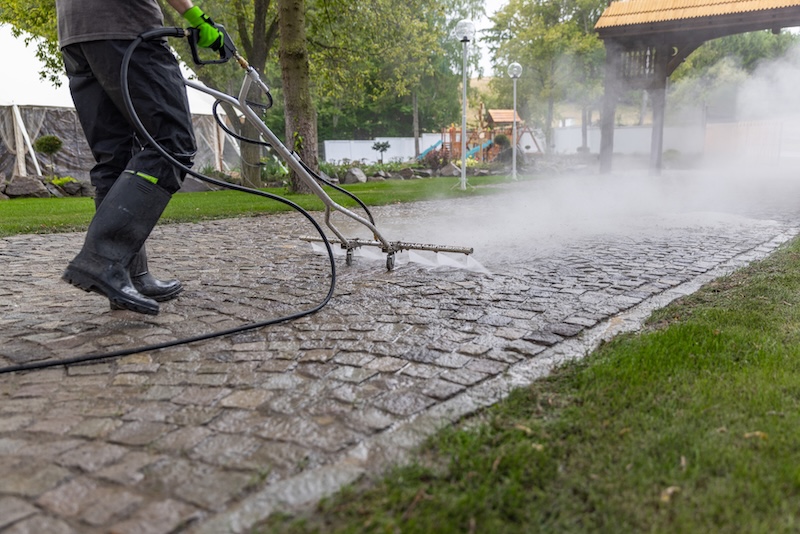
- Effective paving stone cleaning requires the right technique and appropriate precautions. Using surface cleaner attachments, maintaining the correct distance from the surface, and applying the proper spray angle ensure thorough yet gentle cleaning.
However, for surface cleaners to deliver their full cleaning performance, a sufficient water flow rate is essential.
Most models require at least 20 l/min, while around 27 l/min is optimal for many units.
For this reason, systems with a buffer water tank, such as the KB MINI or KB MAXI, are recommended to ensure consistent and efficient cleaning while preventing damage to the surface.
WHAT TYPES OF PRESSURE WASHERS ARE AVAILABLE?
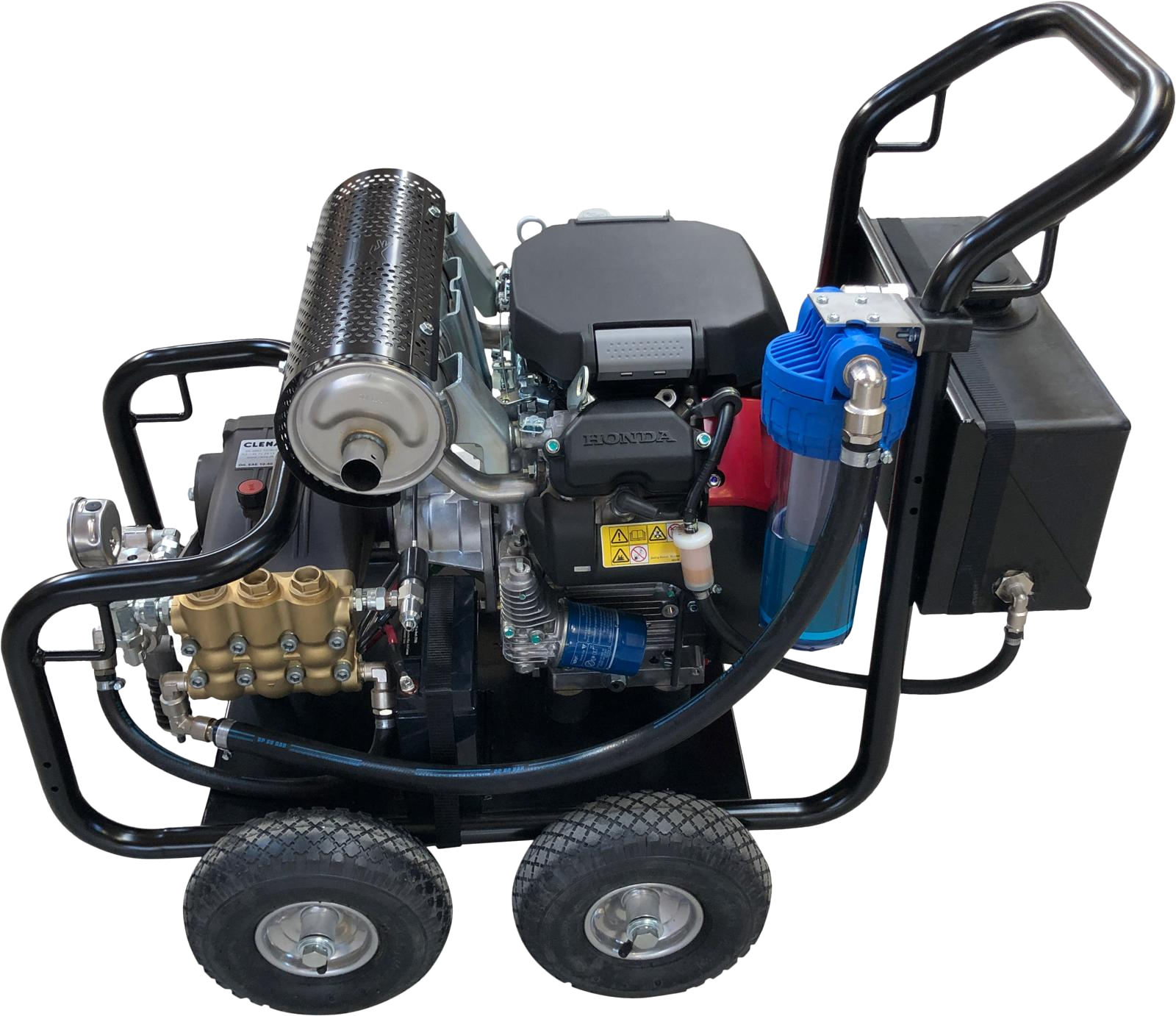
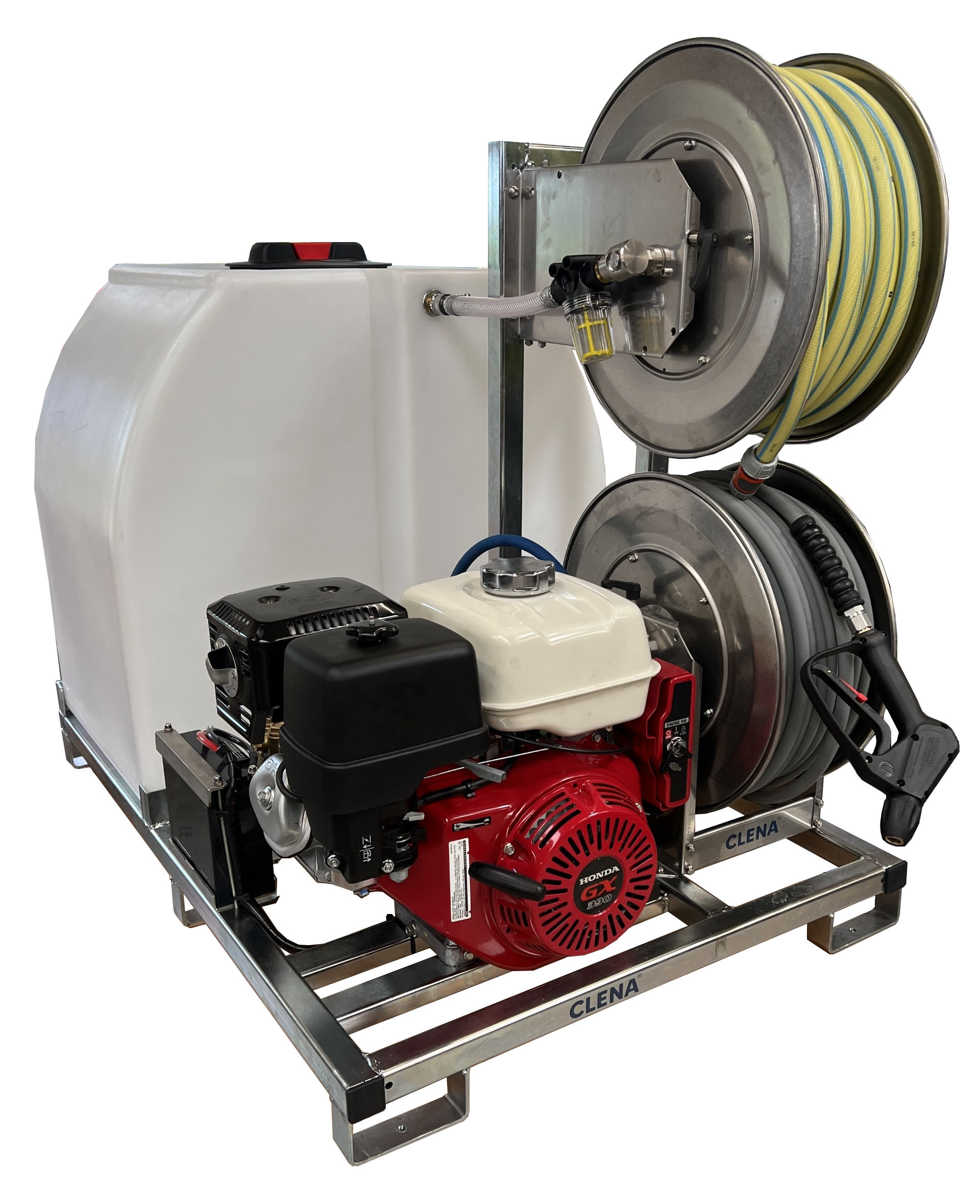
Trailer systems with a buffer water tank, such as the KB MINI or KB MAXI, provide even greater independence. They are specifically designed for applications where a reliable water supply and high flow rates are essential.
The KB 200-20 MINI operates with a 360-litre water tank and a flow rate of 20 l/min, while the KB 270-27 MAXI is available with either a 360-litre or 500-litre water tank and delivers 27 l/min.
This makes these systems particularly suitable for operation directly from a vehicle and for use with surface cleaners that require a constant water supply.
Advantages: Maximum independence, integrated water supply, high flow rate, ideal for professional surface cleaning.
Disadvantages: Requires more space and is designed primarily for continuous professional use.
The most suitable pressure washer for paving stones therefore depends mainly on the application, the size of the area to be cleaned, and the required level of self-sufficiency.
HOW DO PRESSURE LEVELS DIFFER AND WHAT ARE THEIR APPLICATIONS?
HOW DO YOU CLEAN PAVING STONES PROPERLY WITH A PRESSURE WASHER?
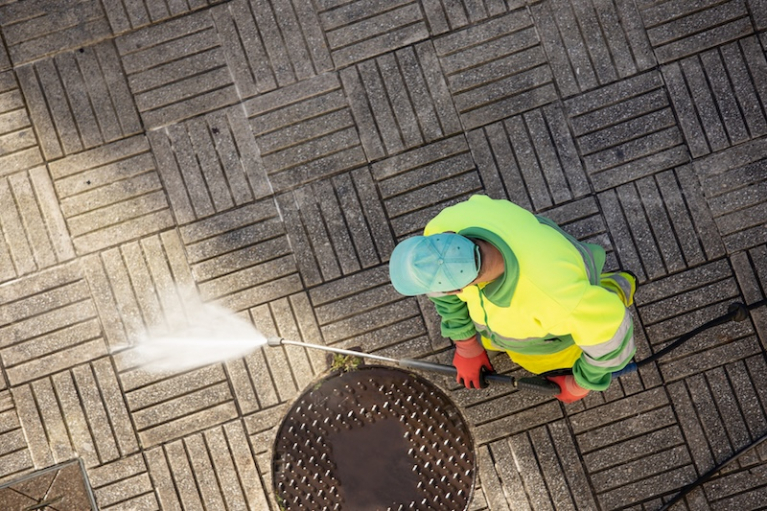
To clean paving stones effectively, the correct application is essential. The first step is to carefully assess the condition of the surface.
This allows the cleaning process to be precisely adjusted and helps prevent potential damage to the material. Different materials and levels of soiling require tailored cleaning methods.
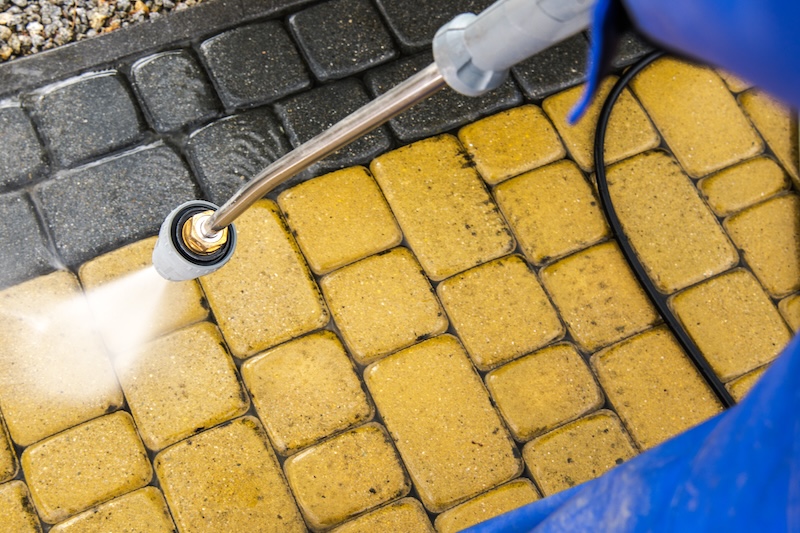
Surface cleaner attachments provide an ideal solution. They ensure even cleaning results while protecting sensitive surfaces through controlled water jet guidance.
This prevents streaking while still cleaning the paving stones thoroughly.
Another important factor is maintaining the correct distance between the nozzle and the paving stone surface.
Keeping an appropriate distance helps prevent structural damage caused by excessive pressure.
The combination of the correct spray angle and the appropriate water jet pressure ensures gentle yet effective cleaning. These factors help clean dirty paving stones efficiently while protecting the surface.
HOT WATER – A GENTLE SOLUTION FOR SURFACE PROTECTION
Hot water is particularly suitable for cleaning paving stones, as dirt can often be removed effectively with lower pressure.
As a general rule, lower pressure combined with a higher water flow rate provides especially gentle cleaning.
This allows even sensitive surfaces to be cleaned thoroughly without unnecessarily stressing the structure of the paving stones or the joints.
WHAT PRECAUTIONS SHOULD BE TAKEN?
WHAT ARE THE BEST PRACTICES FOR CLEANING?
Using circular cleaning movements prevents streaks and ensures an even cleaning result.
When using pressure washers on paving stones, slow and controlled movements are essential, as they optimize cleaning performance.
Cleaning agents increase cleaning efficiency. They should be applied evenly before cleaning to remove heavier dirt as effectively as possible.
This not only improves cleaning results but also contributes to the long-term durability of the surface.
WHAT PROBLEMS CAN OCCUR WHEN CLEANING PAVING STONES?
Excessive pressure during paving stone cleaning can cause structural damage. If pressure washers are not used correctly, pressure-related damage can occur, affecting not only the appearance but also the functionality of the paving stones.
Improper water jet guidance can destabilize the joint structure and lead to uneven surfaces.
- Excessive pressure can roughen the surface or even dislodge paving stones.
- Incorrect water jet guidance promotes washout, resulting in uneven surfaces.
To prevent long-term damage, it is essential to use a cleaning technique specifically suited to the paving stones.
This significantly improves both the maintenance and the service life of the paving stones.
Comprehensive training in pressure washing techniques and practical guidance are valuable tools in achieving the best results.
HOW HARMFUL CAN EXCESSIVE PRESSURE BE FOR PAVING STONES?
Excessive pressure from a pressure washer can damage the surface of sensitive paving stones.
Microcracks can form quickly, affecting not only the appearance but also leading to erosion. Over time, this erosion can weaken the structure and reduce the load-bearing capacity of the paving stones.
Excessive pressure can also remove the jointing material from the joints.
This compromises stability, as the material supporting the paving stones is washed away. The result is a combination of visual defects and structural damage.
Over time, unnecessary surface roughening and material loss may also occur, further reducing the stability of the paved surface. This significantly affects both the appearance and the functional performance of the paving.
WHAT SOLUTIONS DOES CLENA SOLUTIONS OFFER FOR EFFECTIVE PAVING STONE CLEANING?
CONCLUSION: WHICH PRESSURE WASHER IS THE RIGHT CHOICE FOR PAVING STONES?
Individual requirements play a key role in choosing the right pressure washer. CLENA Solutions provides well-designed solutions that adapt flexibly to different operating conditions, making them reliable long-term partners.
- Which materials and surfaces need to be cleaned?
- Which performance class meets your requirements most effectively?
- How robust and low-maintenance are the machines?
The result is reliable cleaning that combines efficiency with gentle surface treatment. This makes CLENA the ideal choice for specialised professional cleaning applications.
FAQ
Which pressure washers are suitable for cleaning paving stones?
For professional paving stone cleaning, petrol-powered pressure washers and trailer systems with a buffer water tank are the most suitable options. Mobile petrol-powered units offer excellent flexibility and performance, while trailer systems such as the KB MINI and KB MAXI also provide an integrated water supply and high water flow rates.
How do pressure levels differ, and what pressure is suitable for paving stones?
The pressure level of a pressure washer determines the effectiveness of paving stone cleaning. In most cases, a pressure of up to 150 bar is sufficient. Excessively high pressure can damage the surface and should be used with care to avoid cracks or erosion. CLENA Solutions offers systems with precise pressure adjustment to help prevent such damage.
What precautions should be taken when pressure washing paving stones?
Maintaining a safe distance from the cleaning surface is essential to prevent material damage. Using the correct spray angle and properly managing wastewater are also important considerations. Freshly sealed paving stones should not be cleaned in order to preserve the integrity of the seal.
What are the best practices for effective paving stone cleaning?
To prevent streaking and achieve even cleaning results, circular movements are recommended when using a pressure washer. In addition, using suitable cleaning agents improves both cleaning efficiency and overall results. Proper preparation and correct application help protect the material and extend the service life of the paving stones.
What solutions does CLENA Solutions offer for paving stone cleaning?
CLENA Solutions develops customised pressure washer systems and modular accessories that are perfectly suited to the requirements of paving stone cleaning. Products from the M2500 series allow precise pressure adjustment, while units such as the KB 200/20 MINI provide outstanding user convenience even in compact applications. This flexibility ensures efficient, economical, and surface-friendly cleaning results.
Get in Touch Now
Are you looking for a durable and powerful cleaning solution? Then CLENA Solutions GmbH is the right choice for you. Contact us for a personalized consultation – together, we’ll find the optimal solution for your cleaning requirements.