500 or 2,000 to 3,000 bar high pressure cleaner: which equipment suits your application?
500 bar, 2,000 bar or 3,000 bar: these figures describe very different water jetting configurations. The right choice for a project depends on the task. Do you need to remove contamination? Does a firmly bonded coating need to be stripped? Or is controlled material removal required?
The pressure rating provides an initial indication. A sound equipment selection also takes into account flow rate, tools, substrate and the supply available at the work site. The highest pressure level is therefore not a universal recommendation.
500 bar for demanding industrial cleaning tasks
A 500 bar configuration may be suitable for applications involving durable surfaces and stubborn residues. Examples include cleaning suitable tanks and vessels or demanding tasks on industrial equipment. Whether this pressure is appropriate for a specific task depends on the contamination, component and intended process.
One example from the CLENA range is the H90 series (H9000). This range offers different combinations of pressure and flow rate. The H9415 operates at 500 bar with 15 l/min, while the H9521 combines 500 bar with 21 l/min. These examples show why water volume needs to be considered when selecting equipment: in addition to the jet’s action, water is needed to carry away and rinse off loosened residues.
Even at the same pressure, different tools and flow rates can produce different working characteristics. The question “Is 500 bar enough?” can therefore only be answered once the required result is clear.
2,000 to 3,000 bar for coating removal and controlled material removal
Ultra-high-pressure applications often involve tasks that go beyond removing ordinary contamination. Typical uses include stripping suitable paints and coatings, industrial rust removal, surface preparation and controlled concrete removal.
For these processes, the intended change to the surface is central to equipment selection. If a coating needs to be removed while preserving the underlying material, the treatment must be configured accordingly. With concrete removal, the aim is to achieve a defined amount of material removal. These different objectives place different demands on pressure, water volume, jetting tools and guidance.
CLENA offers ultra-high-pressure systems up to 3,000 bar for these demanding applications. The specific configuration is assessed against the project requirements.
Comparing the applications
| Pressure range | Potential applications | Key selection questions |
|---|---|---|
| Around 500 bar | Demanding industrial cleaning, cleaning suitable tanks and vessels, and removing stubborn residues. | What residues are present? What treatment can the substrate withstand? How much water does the tool require? |
| 2,000 to 3,000 bar | Coating removal, industrial rust removal, surface preparation and controlled concrete removal. | Which layer needs to be removed? What material removal or surface finish is required? How will the jet be guided? |
The boundaries depend on the process. A task does not necessarily belong to a particular pressure range simply because of its name. The layer structure, adhesion and surface condition can significantly influence the configuration.
Consider pressure and water volume together
Two systems with different pressures and flow rates cannot be assessed using a single figure. What matters is the combination required for the intended result and the tool being used. A higher maximum pressure does not automatically mean that the highest possible flow rate is available at the same time.
Ask for the operating specifications that apply together. For project planning, the relevant figures are the intended combination of working pressure and flow rate. The water and power supply must also suit this configuration.
Tools and the working environment are part of the system
Hoses, connections and jetting tools must be suitable for the intended pressure level and setup. Depending on the task, guided or automated treatment may be appropriate. Access, the work area and the management of the resulting water also need to be included in the planning.
For coating and material removal in particular, a coordinated trial can help assess the required result and suitable process parameters. This provides a basis for establishing realistic equipment requirements.
Plan suitable protective equipment from the outset
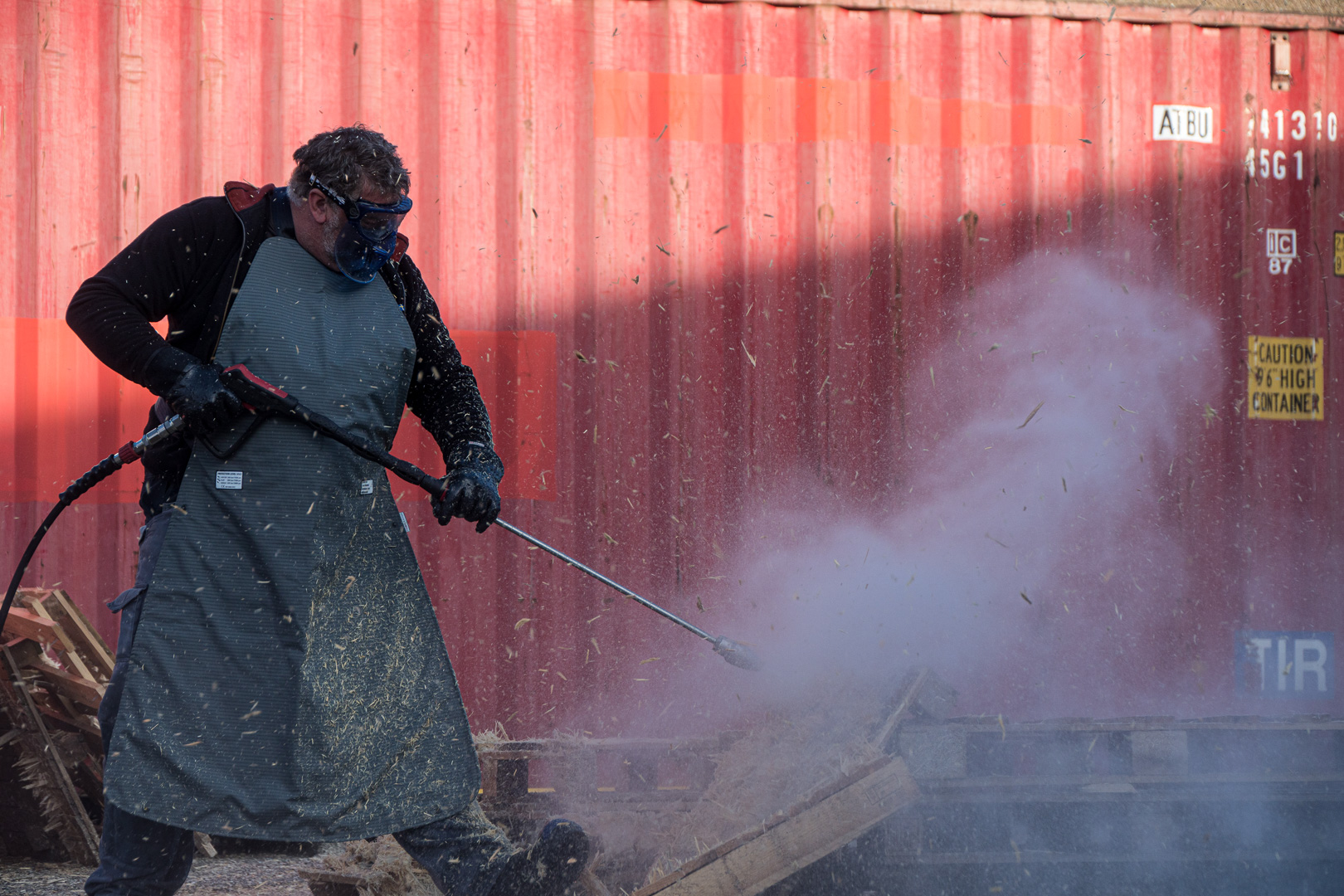
Work with high-pressure and ultra-high-pressure equipment requires personal protective equipment (PPE) matched to the application. Selection is based on the risk assessment and the manufacturer’s instructions. Depending on the task, suitable protective clothing for water jetting, eye and face protection, hearing protection, and hand and foot protection need to be considered. PPE complements technical and organisational protective measures.
Suitable protective equipment is also available from CLENA. When selecting the machine, talk to us about your PPE requirements as well. This allows the machine, accessories and protection needs to be discussed together.
Which pressure level does your project need?
Tell us about the surface, the residue to be removed and the required result. Photos, material details and information about the supply available on site help with the assessment. We will discuss which high-pressure or ultra-high-pressure configuration, accessories and protective equipment may be suitable for your application.
Get in Touch Now
Are you looking for a durable and powerful cleaning solution? Then CLENA Solutions GmbH is the right choice for you. Contact us for a personalized consultation – together, we’ll find the optimal solution for your cleaning requirements.